
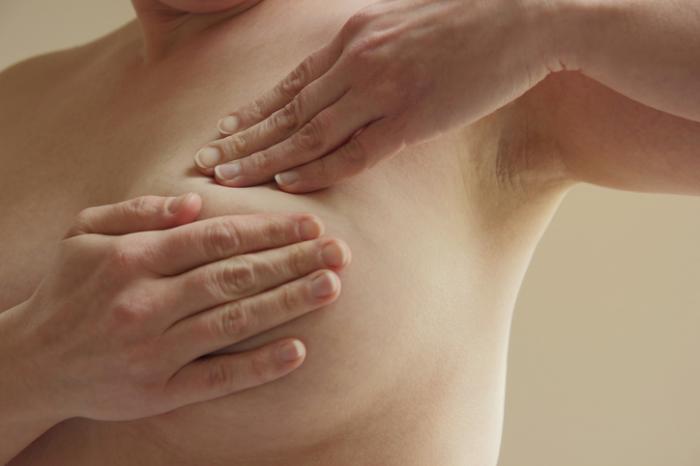
Monthly breast self-examination can help detect abnormalities or changes that may be signs of cancer.
Not every form of breast cancer can be found through a physical examination. However, regular self-examination can increase the chances of discovering certain breast cancers early.
The earlier breast cancer is detected, the more likely it is that treatment will be effective.
A person needs to understand the areas around the breast that are most vulnerable to cancer in order to be able to carry out a self-examination. Seeing pictures of these areas and how a breast may appear if there is cancer present can help.
Where cancer forms
Most breast cancers begin in the milk ducts. These are tube-like structures that deliver milk to the nipples.
Cancer may also form in the glands that produce milk, called lobules. Individual lobules are grouped into larger structures called lobes, and each lobe is connected to a duct.
As this system of lobes and ducts surrounds the nipple from within, ductal or lobular cancers may affect the appearance and feel of the nipples and the areolae around them.
The following carousel is a step-by-step guide, with pictures, of how to perform self-examination of the breasts. It also includes some breast cancer pictures to help people understand what cancer warning signs may look like.
How to perform breast self-examination
The National Breast Cancer Foundation suggest three steps for an effective breast self-examination:
• visual examination
• physical examination while standing
• physical examination while lying down
Visual and standing examination
A visual examination can be done in front of a mirror. The breasts and nipples should be carefully checked for abnormalities or discharge.
A standing examination is often performed in the shower, because the skin is easier to examine when slippery. Each breast should be checked from its sides to its center for lumps or knots.
Using circular motions, varying amounts of pressure should be applied to each spot along the breast. This ensures that both the superficial and deep layers of the breast tissue are examined.
Breast self-examinations and early diagnosis
Combined with yearly mammograms and examinations by the doctor, breast self-examination can help to catch breast cancer in its early stages.
A national survey of 361 breast cancer survivors, which was published in the Journal of Women’s Health, reported that 25 percent of cases were detected through self-examination.
For most people, the earlier that breast cancer is diagnosed, the better the outlook.